I just finished a great weekend in the San Francisco Bay Area, thanks largely to Google and their Highly-Open Participation Contest (GHOP). As you may already know, Google worked with several open source projects to run a contest for high school-aged students to complete tasks ranging from translation and documentation to coding and other bug fixes. Vincent Untz, Andre Klapper, and Behdad Esfahbod, Lucas Rocha, and Christian Kellner ran things from the GNOME end, and did a great job. Unfortunately the awards ceremony for GHOP grand prize winners was scheduled for this past Friday, and they were busy at GUADEC. Since I had been involved in GHOP as a mentor, I volunteered to represent GNOME at the ceremony. Later, I found out that the Mono project was unable to send a representative as well. Their side was largely administered by Miguel de Icaza and Michael Hutchinson, and Michael asked me to represent them since I was already going to be there. So although I was probably the least-involved mentor at the ceremony, I was also the only one with two students. :-P
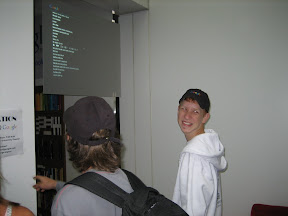
GNOME's Grand Prize Winner: Patrick Hulin
Patrick is a junior at Hopkins School in New Haven, CT. He finished several tasks, often swooping in to get the job done after another student bailed. He submitted fixes to Totem and ported baobab from gnome-vfs to gio, in addition to documentation and GTK+ performance tasks. I had a great time meeting him and his parents on Friday. I'm always encouraged to meet teenagers who actually *enjoy* math, and find opportunities to learn about software development. Patrick is going to be a counselor at a local computer camp this summer, brainwashing^W teaching teens the ways of code and circuit. We had a blast in the lobbies at each Google building, watching on a screen as the world's search queries scrolled by.
Mono's Grand Prize Winner: Dan Abramov
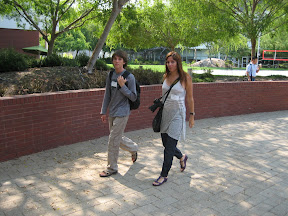
Dan is from St. Petersburg, Russia, and came to the ceremony with his mother (who had an awesome camera, I hope I get to see some of her photos from the trip). He's a largely self-taught 16 year old dynamo. He made some nice contributions to Mono, including Gendarme analysis rules and MonoDevelop addins and documentation. One of my favorite moments of this trip is when I was asking Dan about his future plans, did he intend to go to university in Russia, pursue Computer Science, etc. He told me that although he felt confident programming in managed languages like C#, he wanted to understand more about the low-level details. He asked me if I had read Joel Spolsky's article on "leaky abstractions", and described how sometimes .NET/Mono programming could be like that. I could only laugh with joy that this guy was already reading (and understanding) Joel.
I think it's pretty clear that these students have a huge head-start in computer science. Everybody was interested and excited about open source software. I got a lot of questions about what it's like to work on open source software all day at Novell. Being there, it really felt like I was looking at the next generation of open source leaders. I can only hope they stick with it instead of going down the boring path of being a doctor or a lawyer or something. ;-)
Thank you Google for encouraging these kids, and providing incentives like GHOP and Summer of Code to keep them in our world.
The Visit
It was pretty cool to meet the mentor representatives from other open source projects, some of whom were actually Google employees. Friday was a busy day, what with touring the Google campus, having the actual award ceremony, being interviewed for YouTube (eep), and stuffing my face. We saw presentations about App Engine (by Guido van Rossum), Android (Romain Guy), Google infrastructure (Jeff Dean), and testing at Google (Bharat Mediratta and Mike Bland).
My favorite talk by far was the testing one. Bharat and Mike are among the better pair presenters I've seen, so it was a joy just to watch them. But the subject matter is dear to my heart. At my last company I was often frustrated with how difficult it was to proliferate best practices (specifically TDD) even within a single team. I was fascinated to hear how these guys just decided to fix the testing problem at Google, guerrilla-style. They introduced the awesome Testing on the Toilet newsletter, devised testing training and certification programs for projects and employees, and introduced "test mercenaries" to spread skills where needed by hopping from project to project, staying only a few months with each. Ingraining these practices in a company's culture is a singularly difficult problem. Their example is inspiring, though of course it requires constant ongoing work, and it might be difficult to convince any company to invest such significant resources into a never-ending program like that. I've been following the Testing on the Toilet blog for awhile, but meeting these guys was truly invigorating. I wish there had been time to chat them up afterwards!
The Rest
Over the weekend, Ellery and I visited our old stomping grounds at San Francisco State University, Stonestown Borders, and West Portal. We had a fun dinner with Liz and Bernat at Mozzarella Di Bufala. It was nice; I really do miss my friends sometimes. :-) Later we visited some family in the East Bay.
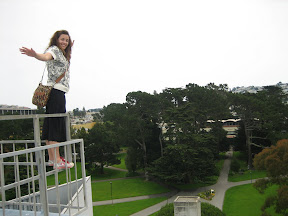
The rest of my photos can be seen on my picasaweb. By the way, Lazyweb, do you know how to tag all photos in an album at once?
GNOME's Grand Prize Winner: Patrick Hulin
Patrick is a junior at Hopkins School in New Haven, CT. He finished several tasks, often swooping in to get the job done after another student bailed. He submitted fixes to Totem and ported baobab from gnome-vfs to gio, in addition to documentation and GTK+ performance tasks. I had a great time meeting him and his parents on Friday. I'm always encouraged to meet teenagers who actually *enjoy* math, and find opportunities to learn about software development. Patrick is going to be a counselor at a local computer camp this summer, brainwashing^W teaching teens the ways of code and circuit. We had a blast in the lobbies at each Google building, watching on a screen as the world's search queries scrolled by.
Mono's Grand Prize Winner: Dan Abramov
Dan is from St. Petersburg, Russia, and came to the ceremony with his mother (who had an awesome camera, I hope I get to see some of her photos from the trip). He's a largely self-taught 16 year old dynamo. He made some nice contributions to Mono, including Gendarme analysis rules and MonoDevelop addins and documentation. One of my favorite moments of this trip is when I was asking Dan about his future plans, did he intend to go to university in Russia, pursue Computer Science, etc. He told me that although he felt confident programming in managed languages like C#, he wanted to understand more about the low-level details. He asked me if I had read Joel Spolsky's article on "leaky abstractions", and described how sometimes .NET/Mono programming could be like that. I could only laugh with joy that this guy was already reading (and understanding) Joel.
I think it's pretty clear that these students have a huge head-start in computer science. Everybody was interested and excited about open source software. I got a lot of questions about what it's like to work on open source software all day at Novell. Being there, it really felt like I was looking at the next generation of open source leaders. I can only hope they stick with it instead of going down the boring path of being a doctor or a lawyer or something. ;-)
Thank you Google for encouraging these kids, and providing incentives like GHOP and Summer of Code to keep them in our world.
The Visit
It was pretty cool to meet the mentor representatives from other open source projects, some of whom were actually Google employees. Friday was a busy day, what with touring the Google campus, having the actual award ceremony, being interviewed for YouTube (eep), and stuffing my face. We saw presentations about App Engine (by Guido van Rossum), Android (Romain Guy), Google infrastructure (Jeff Dean), and testing at Google (Bharat Mediratta and Mike Bland).
My favorite talk by far was the testing one. Bharat and Mike are among the better pair presenters I've seen, so it was a joy just to watch them. But the subject matter is dear to my heart. At my last company I was often frustrated with how difficult it was to proliferate best practices (specifically TDD) even within a single team. I was fascinated to hear how these guys just decided to fix the testing problem at Google, guerrilla-style. They introduced the awesome Testing on the Toilet newsletter, devised testing training and certification programs for projects and employees, and introduced "test mercenaries" to spread skills where needed by hopping from project to project, staying only a few months with each. Ingraining these practices in a company's culture is a singularly difficult problem. Their example is inspiring, though of course it requires constant ongoing work, and it might be difficult to convince any company to invest such significant resources into a never-ending program like that. I've been following the Testing on the Toilet blog for awhile, but meeting these guys was truly invigorating. I wish there had been time to chat them up afterwards!
The Rest
Over the weekend, Ellery and I visited our old stomping grounds at San Francisco State University, Stonestown Borders, and West Portal. We had a fun dinner with Liz and Bernat at Mozzarella Di Bufala. It was nice; I really do miss my friends sometimes. :-) Later we visited some family in the East Bay.
The rest of my photos can be seen on my picasaweb. By the way, Lazyweb, do you know how to tag all photos in an album at once?


